On the 5+2 rhythm, the structures we inherit, and the responsibility that comes with choosing our own.
“It is Monday morning.” – The sentence already contains a structure. It tells us that something has ended and something else is beginning. The weekend is behind us; the working week lies ahead. Five days of activity, followed by two days of interruption. A rhythm so deeply embedded in everyday life that we rarely experience it as a convention at all.
And yet it is one. This particular Monday followed a weekend during which I had spent most of Saturday and Sunday in the office, working until late into the night. There was nothing exceptional about it. No crisis, no deadline dramatic enough to justify a story about sacrifice. It was simply work that, at that moment, I had chosen to do. That ordinary fact made me think about the weekend itself. Not about whether weekends are necessary. They clearly are. Rest is necessary. Distance is necessary. Time that is not immediately claimed by productivity is necessary.
The more interesting question is whether Saturday and Sunday are necessarily the only possible form that such time can take.
The Structures We Inherit
Human beings organise life through systems. We divide the day into hours, the year into months, land into parcels and cities into districts. We draw lines in order to make complexity manageable. Without such structures, collective life would be almost impossible.
The working week belongs to this family of inventions. Monday to Friday establishes a common field of activity. Saturday and Sunday create a shared interval in which schools close, offices become quieter, families can meet and societies collectively slow down. Its value lies precisely in the fact that it is shared. But there is an interesting transformation that occurs when a useful collective structure becomes so familiar that it begins to appear natural.
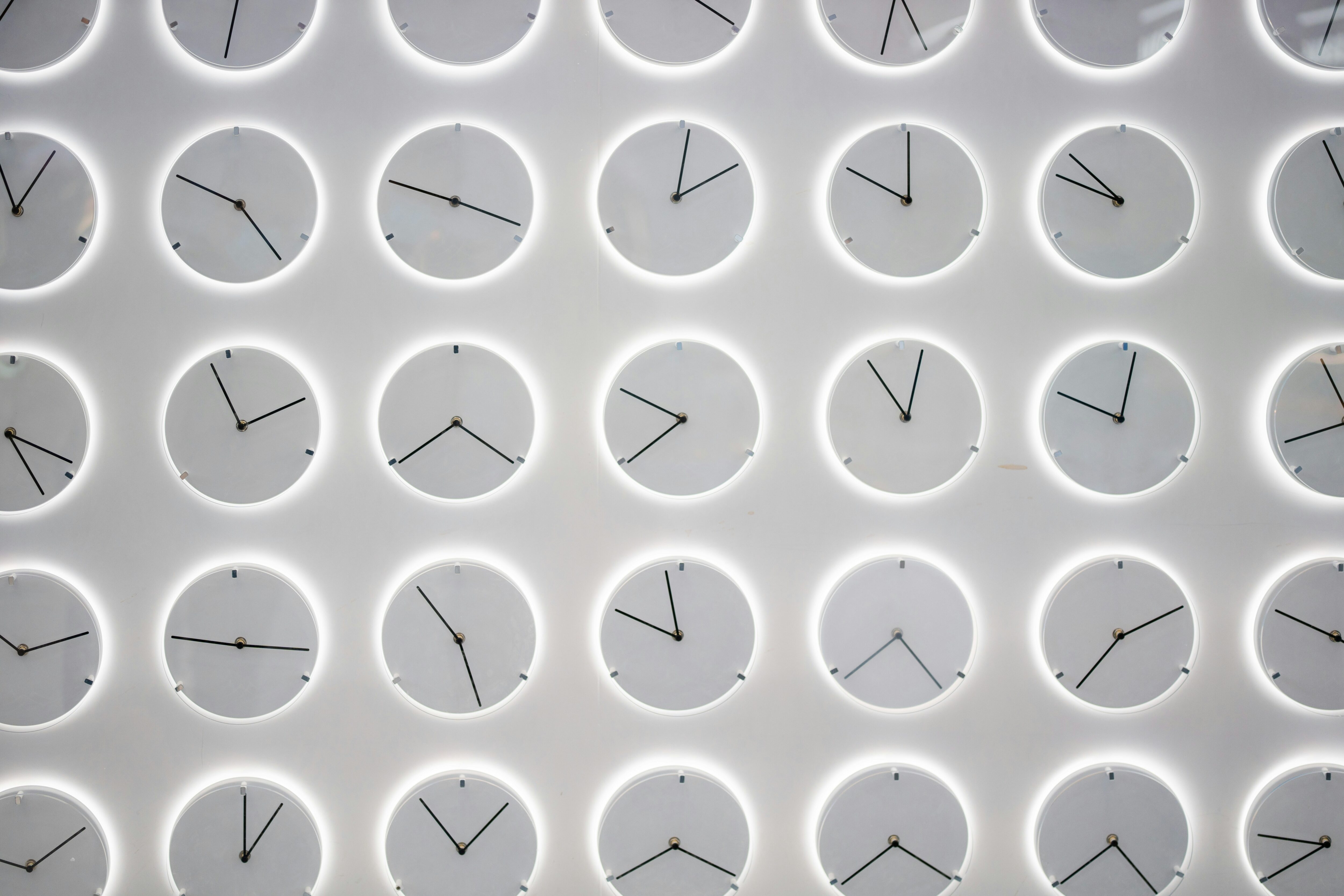
Five plus two begins to feel less like an organisational agreement and more like an inherent property of time itself. – It is not. – Nature contains days and seasons, rhythms of light and darkness, growth and decay. But it contains no Monday.
A bird does not recognise the beginning of the working week. A tree does not alter its behaviour because Sunday has arrived. The sun does not suspend its activity because our calendars have designated a day of rest.
This observation is not an argument against calendars. It is simply a reminder that there is a difference between the world and the systems through which we organise it. That distinction matters. Because structures are useful precisely as long as we remember that they are tools.
Freedom and Its Opposite
Running one’s own business alters the relationship to such structures. The obvious interpretation is that it offers freedom. To some extent, it does.
A weekday afternoon can become private time. A journey that would be exhausting on a Saturday can happen quietly on a Tuesday. A place normally overcrowded at the weekend can be experienced almost empty in the middle of the week.
There is something deeply valuable in the ability to move time rather than merely submit to it. But freedom is never one-sided. If nobody determines when one must work, nobody necessarily determines when one must stop. The boundary that is externally imposed in more conventional working arrangements becomes internal. There is always another drawing that could be refined. Another email that could be answered. And Another decision that could be prepared. And Another idea that could be developed a little further.
In this sense, autonomy removes not only constraints but also protection. The same freedom that allows Wednesday to become Sunday allows Sunday to become Wednesday. And this is perhaps the more difficult dimension of independence: not the ability to work whenever one wants, but the responsibility of knowing when not to.
Structure Is Not the Purpose
Architecture offers an obvious analogy. We use grids because they give order to complexity. They help coordinate structure, façades, installations, circulation and construction. They allow many people to work within the same logic. But no serious architect would argue that a building should become worse merely in order to preserve the purity of a grid.
The grid is valuable because it serves the architecture. The moment architecture begins serving the grid, the relationship has been reversed. Perhaps the same is true of time. The working week is a framework. It coordinates lives. It allows institutions and individuals to meet one another within a predictable rhythm. But a framework should not be confused with the life it is intended to support.
There are moments when remaining faithful to the structure produces exactly the opposite of what the structure was intended to protect.
A Saturday spent physically away from work but mentally absent from one’s family may fulfil the calendar definition of a weekend while missing its purpose entirely.
A Wednesday afternoon spent genuinely present with people one cares about may violate the conventional timetable while fulfilling that purpose perfectly.
The question is therefore not simply when we stop. The more difficult question is whether we are actually present when we do.
The Profession That Follows You Home
Architecture complicates this distinction further because it is not a profession that remains neatly within the walls of an office.
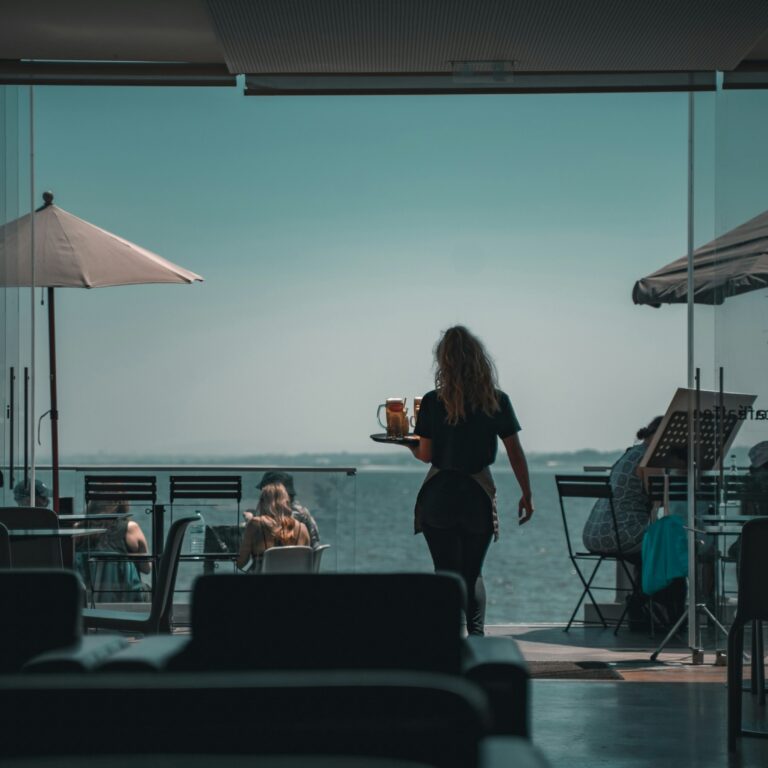
To become an architect is, gradually, to acquire a particular way of seeing. A restaurant becomes light, circulation, acoustics and material. A hotel room becomes proportion, threshold, storage and sequence. A walk through Vienna becomes an observation of façades, pavements, entrances, alignments and the changing scale of the street.
One can stop working without necessarily stopping architecture. For a long time I understood this as evidence that work had invaded private life. I am less certain of that now.
There is a difference between an obligation that one cannot escape and an interest that has become part of one’s perception.
Architecture is not only something I do. It has become, to some degree, a way through which I understand the world. I would not necessarily want to switch that off. The more important task is learning when that perception enriches an experience and when it prevents me from being present within it.
A profession can become part of one’s identity without being entitled to occupy every moment. That distinction is subtle, but important.
The Responsibility of Choice
We often speak about freedom as though it were primarily the absence of restriction. But perhaps freedom is better understood as the presence of responsibility. When the timetable has been decided by somebody else, the question of whether one should continue working has already been partly answered.
When the decision belongs entirely to oneself, the problem becomes more demanding. Is another hour of work genuinely necessary? Will it materially improve the project? Or is continuing simply easier than stopping? Is ambition still producing something meaningful, or has it become habit? Is responsibility being exercised, or merely performed through constant availability? And conversely: can one take a Tuesday afternoon away from work without interpreting it as failure? Can one allow life to occur before every task has been completed?
This last question may be the most important. Because for anyone responsible for a company, a project or a profession, the work is never completely finished. There is always a possible next step. If life begins only after everything has been resolved, then life is permanently postponed.
The Weekend as an Idea
Perhaps the weekend is therefore more interesting as an idea than as a position on the calendar. Its essential proposition is not that Saturday and Sunday possess some unique quality. Its proposition is that life requires intervals. Moments in which productivity ceases to be the organising principle. And moments in which attention can move elsewhere. Moments in which we permit ourselves to be unavailable to the endless possibility of doing more.
For most people, a shared weekend is probably the most sensible and humane way of protecting those intervals. Its collective character gives it strength. But for those whose professional lives allow, or demand, a different rhythm, the deeper responsibility may be to preserve the principle even when the calendar changes. Not to abolish rest. And not to glorify permanent work. Not to turn flexibility into another argument for productivity. But to become more conscious of the architecture of one’s own time.
Where are the boundaries? Which ones are inherited? And which ones remain useful? Which ones should move? And what are they ultimately intended to protect?
Running my own office has probably given me fewer conventional weekends. It has also made me much more aware that time is not merely something that happens to us.
To some extent, we construct it. And like any structure, it deserves to be questioned when it no longer serves the life taking place within it. Perhaps that is the real exchange. Less certainty about where work ends. More responsibility for deciding where life begins.
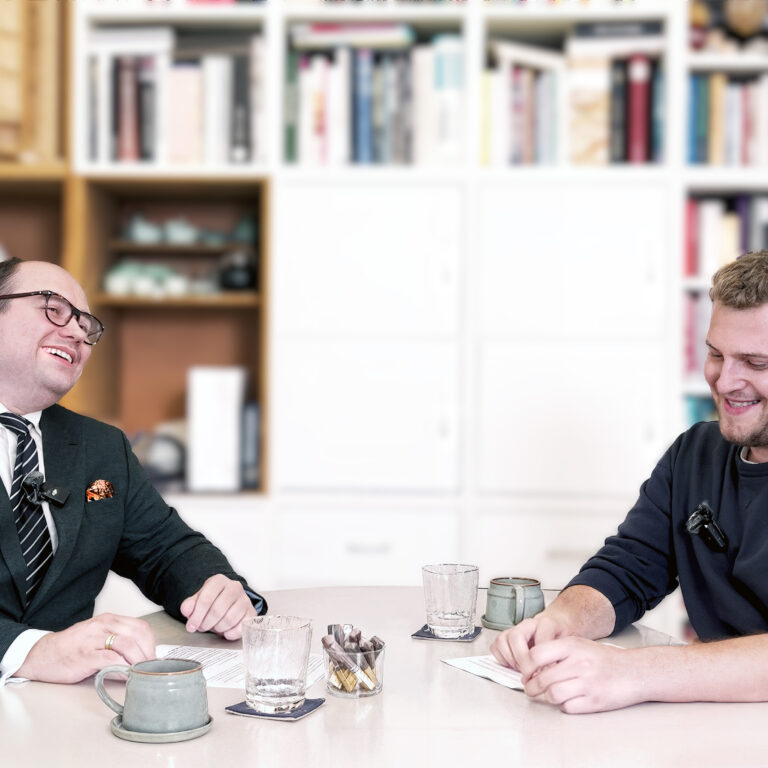
This essay is developed from Episode 002 of “ON THE WAY,” recorded on a Monday morning on the way to the office.